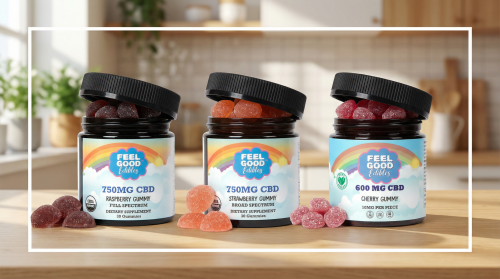

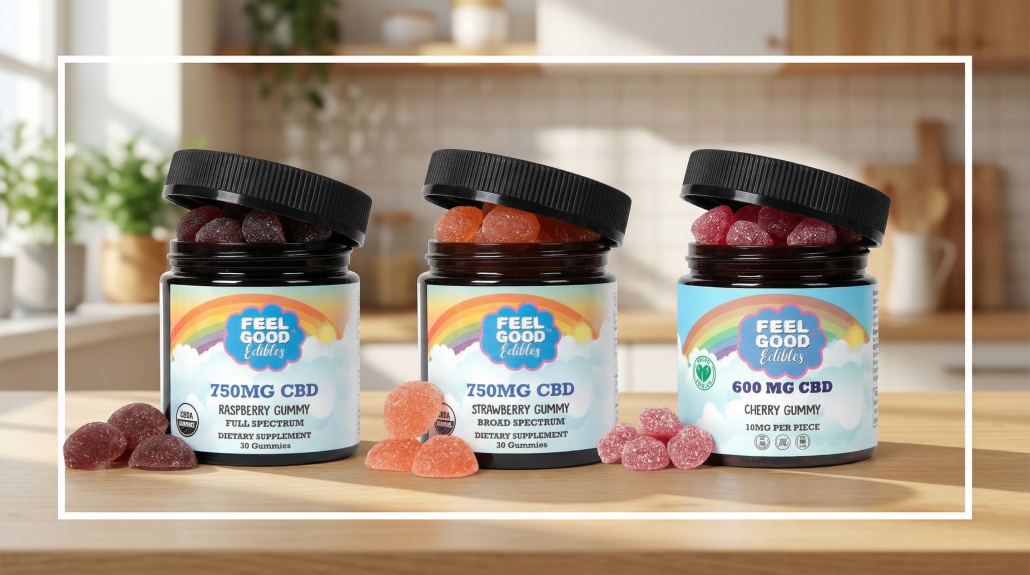
One of the quiet frustrations of shopping for CBD gummies is that the labels often sound more confident than they are clear. Full-spectrum, broad-spectrum, and THC-free all suggest meaningful differences, yet many shoppers are left wondering what those distinctions actually mean once the jar is open and the routine begins.
This is not a small question. The format you choose affects how comfortable you feel with the product, how predictable the experience seems, and whether the gummy fits the kind of life you actually live. For one person, that means wanting the widest possible hemp profile. For another, it means wanting to avoid THC altogether. For many, it simply means wanting to understand the category well enough to buy without second-guessing every decision.
Consumer-health guidance makes that clarity even more important. The National Center for Complementary and Integrative Health warns that over-the-counter CBD products may not always contain what their labels suggest and may include unintended THC.1 Project CBD, meanwhile, encourages shoppers to review per-serving cannabinoid amounts and independent testing before buying.2 In other words, spectrum language is useful, but only when it is backed by transparent details.
Why these three categories matter so much
The easiest way to think about spectrum categories is to imagine three different philosophies of formulation. One tries to preserve a wider range of hemp compounds, including a small amount of THC. One aims to keep a broader hemp profile while minimizing or removing THC. One focuses on a no-THC positioning that appeals to shoppers who want the clearest possible boundary.
Each category has a personality, and each tends to attract a different kind of buyer.
| Format | General idea | Often appeals to shoppers who want |
|---|---|---|
| Full-spectrum | A wider cannabinoid and terpene profile that may include a small amount of THC | A more complete hemp profile and a whole-plant approach |
| Broad-spectrum | Multiple hemp compounds with low or no THC depending on the formula | A middle path between hemp complexity and THC caution |
| THC-free | A formula positioned around no THC presence | Maximum clarity for shoppers who want to avoid THC entirely |
That is the technical overview. The lived reality is more emotional. People are not just choosing chemistry. They are choosing comfort.
Full-spectrum gummies: richer profile, more nuance, more questions
Full-spectrum gummies often attract shoppers who like the idea of a wider array of naturally occurring hemp compounds remaining in the formula. For some, that feels more complete and more aligned with the original plant profile. But full-spectrum does not mean carefree. It means the details matter even more.
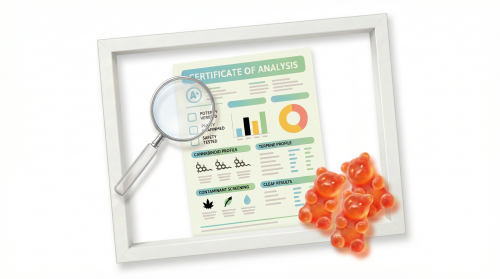
A shopper considering this format should pay close attention to the label, the per-serving cannabinoid amounts, and the COA. Project CBD specifically recommends reviewing both CBD and THC amounts per serving and verifying them through independent testing.2 That advice is especially relevant in full-spectrum products, where small THC amounts are part of the conversation rather than an afterthought.
| Full-spectrum consideration | Why it matters |
|---|---|
| THC presence | Even a small amount matters for shoppers who want certainty about routine and labeling |
| COA review | Helps confirm that the formula matches the product description |
| Serving awareness | Encourages more thoughtful use and fewer surprises |
Full-spectrum may feel attractive to shoppers who are comfortable with nuance. It is often not the first choice for people who want the simplest possible answer to the THC question.
Broad-spectrum gummies: the middle path for careful shoppers
Broad-spectrum gummies often appeal to people who like the idea of a more layered hemp profile but do not want the ambiguity that can come with THC-containing formats. In the best cases, broad-spectrum products feel like a thoughtful compromise: more than a single-note formula, less uncertainty than a product openly built around THC presence.
But here again, the label alone cannot do all the work. Some products use broad language that sounds reassuring without fully explaining the cannabinoid profile. That is why both NCCIH and Project CBD guidance remain so relevant. Mislabeling is not a theoretical problem in this category; it is part of the reason careful shoppers now demand more documentation.1
A strong broad-spectrum gummy should make its position easy to understand. It should not require a detective’s mindset to answer simple questions about potency, THC status, or testing.
THC-free gummies: clarity, routine, and peace of mind
THC-free gummies tend to speak most directly to adults who want predictability above all else. They are often chosen by people building an evening routine, maintaining a clearer-headed daytime rhythm, or simply preferring products that remove one more layer of uncertainty from the shopping process.
There is something quietly elegant about that preference. In a crowded market, simplicity can be a strength. A THC-free format can feel easier to evaluate, easier to explain, and easier to fit into ordinary life. That does not mean a shopper should stop asking questions. NCCIH still warns that some products may not match their labels, and unintended THC remains a real concern in the wider market.1 The answer, again, is not blind trust. It is verified trust.
| THC-free shopping question | What to confirm |
|---|---|
| Does the label clearly say THC-free? | The product description should be direct rather than vague |
| Does the COA support that claim? | Independent testing should align with the label |
| Is the brand careful in its language? | Responsible wording usually signals a more trustworthy seller |
For many everyday shoppers, THC-free gummies are not about playing it safe in a timid way. They are about building a routine that feels stable, legible, and easy to repeat.
How to choose the right format for your routine
A good gummy does not exist in the abstract. It exists in the context of your actual habits. The person shopping for a low-drama evening ritual is not making the same decision as the person who wants the broadest available hemp profile. The best format is the one that matches your goals honestly.
| If you value… | You may lean toward… | Why |
|---|---|---|
| Whole-plant complexity | Full-spectrum | You are comfortable evaluating THC details and want a wider profile |
| Balance between profile and caution | Broad-spectrum | You want more than a single-note formula with clearer THC boundaries |
| Maximum simplicity about THC | THC-free | You want the cleanest possible fit for a predictable routine |
Whichever route you choose, the smartest buying habit remains the same: compare the product description to the COA, check per-serving amounts, and stay skeptical of overpromising language.1
Why this comparison matters for SEO and for real people
Searchers looking up spectrum differences are usually very close to a decision. They are not reading for entertainment alone. They are trying to decode the marketplace before spending money. That makes this one of the most valuable educational topics a CBD brand can cover, because it answers a question customers genuinely ask in the final stages of evaluation.
The best brand voice in this space is not the loudest one. It is the clearest. That is why spectrum education matters so much. It turns confusion into confidence, and confidence is what makes the next step feel easy.
If you want to keep exploring the details behind labels and formulations, you may also enjoy What are Total Active Cannabinoids (TAC)?, Understanding the Differences Between Delta THC Cannabinoids, and 7 Little-Known Cannabinoid Facts.
The bottom line
Full-spectrum, broad-spectrum, and THC-free gummies are not just different marketing phrases. They are different ways of shaping the buyer’s experience. Full-spectrum often speaks to shoppers comfortable with a broader hemp profile. Broad-spectrum offers a middle path. THC-free appeals to readers who want the cleanest, most predictable answer to the THC question.
A thoughtful purchase begins when the label, the lab report, and your own routine all line up. When that happens, the category feels less noisy and much more useful.
FDA Disclaimer: These statements have not been evaluated by the Food and Drug Administration. These products are not intended to diagnose, treat, cure, or prevent any disease.